School News
September 23, 2026

September 23, 2026
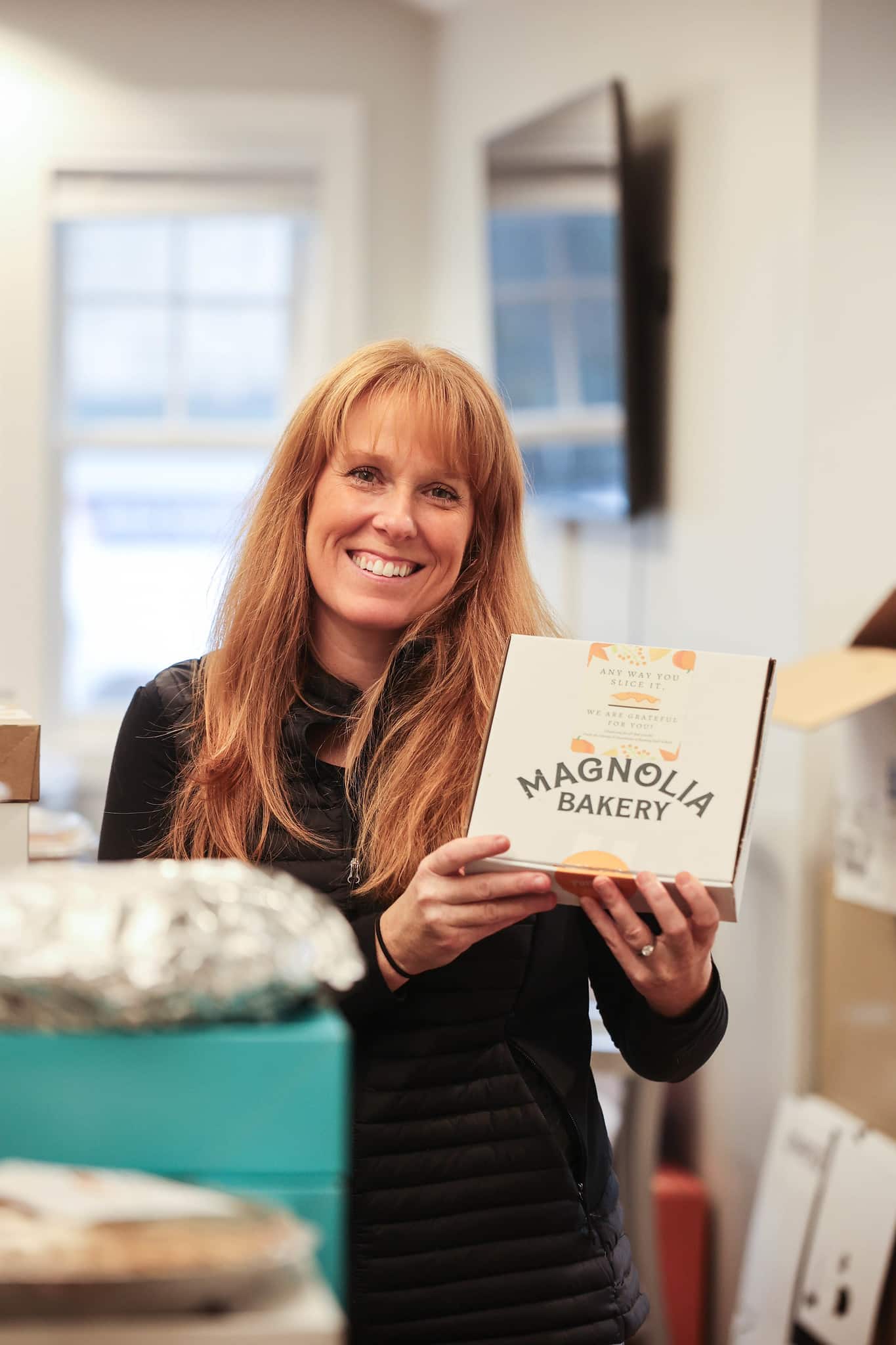
Halfway through an August conversation about Danielle Young’s years leading the Rumsey Circle Parents’ Association, a longtime member of Rumsey’s maintenance team appeared at the door. He’d spotted her car coming down the hill.
“I knew you couldn’t stay away,” he said. “That didn’t take long.”
Danielle laughed. Her youngest son had graduated in June, closing out the Young family’s fourteenth consecutive year as Rumsey parents. She’d officially handed the presidency to Becky Alves P’32. And yet here she was, back on campus, helping with the transition.
“I told Becky I wasn’t going to leave her in the lurch,” Danielle said. “Whatever you need, call me anytime.”
It was a fitting interruption. Young’s contribution at Rumsey has rarely happened at a podium or behind a closed office door. It’s happened around dining hall tables, over coffee on the first day of school, at book fairs and carnivals, in planning meetings and group texts, in the countless small exchanges through which a school starts to feel like a community.
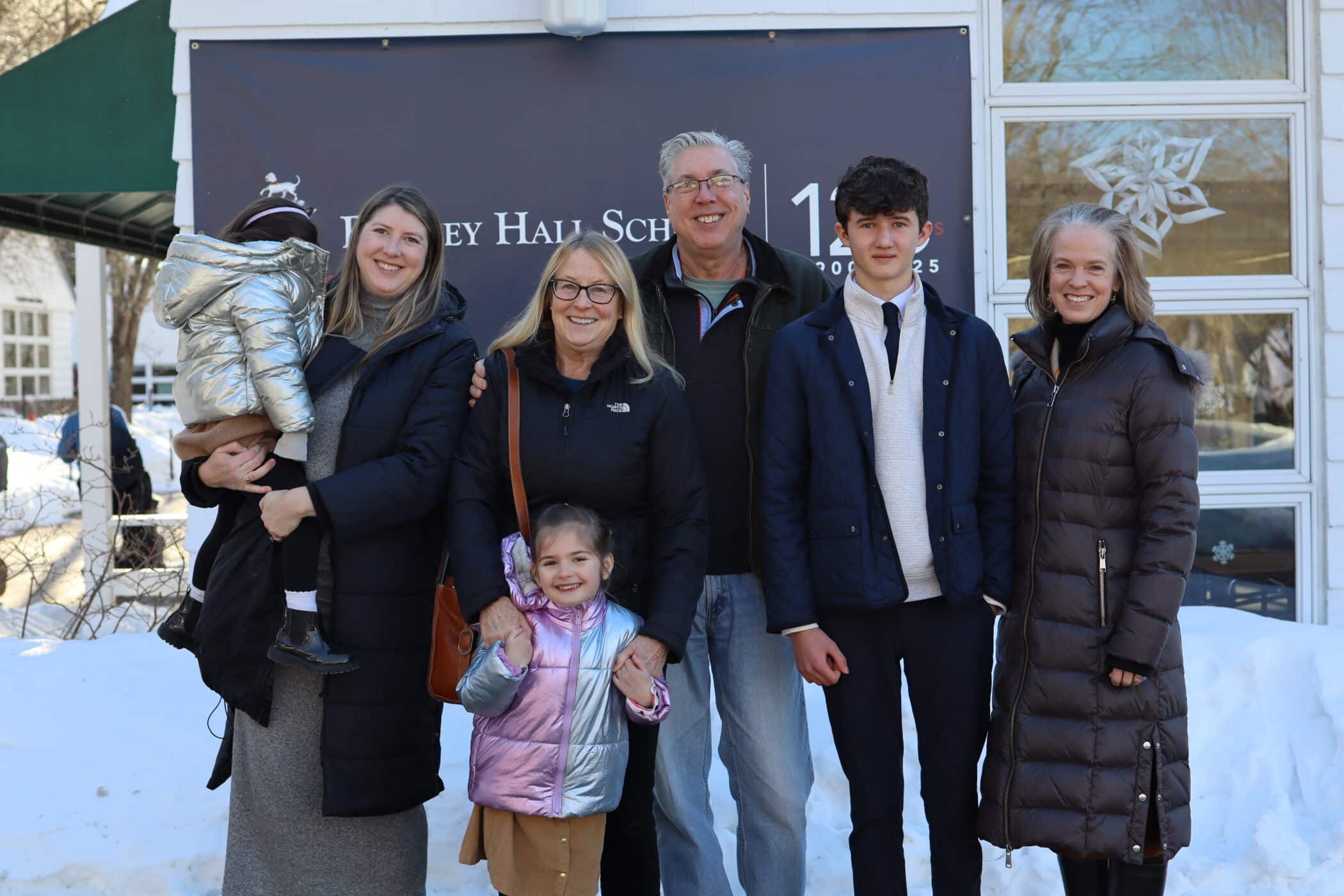
Young arrived at Rumsey in 2012 with a family connection already in place. Her husband, Shannon Young ’89, had been a student, and his mother had volunteered with the Rumsey Circle years earlier. Danielle and Shannon would go on to send three sons through the school: Noah ’22, Oliver ’23, and Walker ’26.
She joined Rumsey Circle her first year, when the old dining hall was still standing. “I like to volunteer,” she said. “So I dove right in.” Within a year she was vice president. In 2016, when the presidency opened, she stepped in — a natural progression, she calls it — and stayed for the next ten years.
The beauty in volunteering, is how it can benefit everybody.” – Danielle Young
The length of her tenure is remarkable. More telling is how she talks about it. She credits the presidents before her. She’s careful to separate the events she introduced from the ones she inherited. Asked what she accomplished, she tends to answer in the first person plural. She’d rather talk about what took root than about who planted it.
Under Young, Rumsey Circle grew from a relatively informal monthly gathering into a broader, more connected parent organization. The executive committee expanded beyond its original five members to include Lower and Upper School coordinators. A set of WhatsApp groups was launched to keep parents in the loop. Speaker sessions covered internet safety, screen use, financial literacy, and artificial intelligence.
But the changes that matter most to Young are smaller than any of that. They’re the ones that helped a new parent feel a little less new. She introduced the first-day welcome coffee and Parents’ Night Out, two events built to lower the social threshold of a new school.
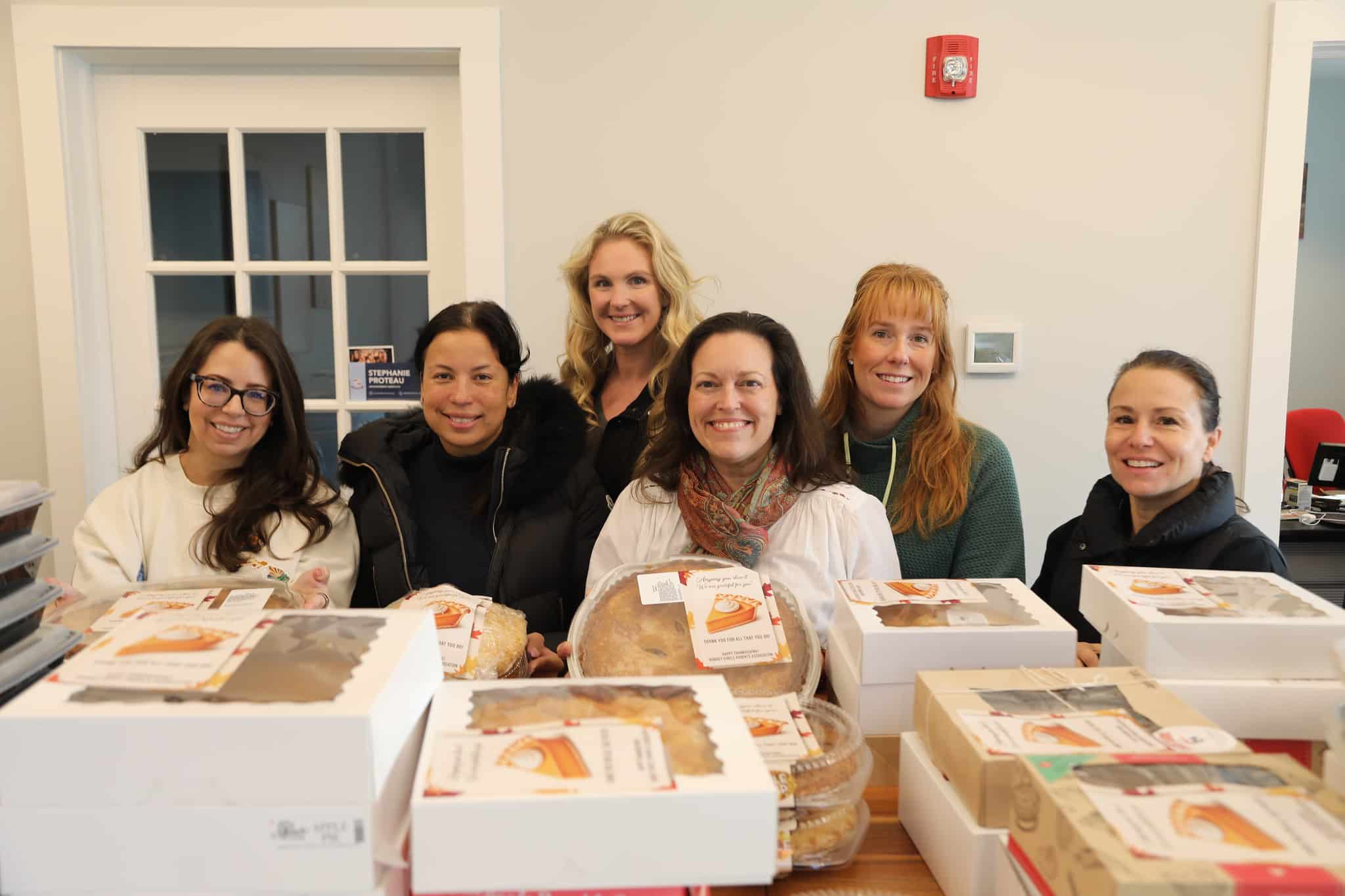
“Sometimes it’s hard to get in and get to know people,” she said. She wanted families to be able to “immerse into the community really quickly,” rather than look up months later and realize they still didn’t know anyone.
That intention even shaped how she recruited volunteers. Young had heard enough stories about parent groups that felt like traps, where one meeting somehow became a lifetime commitment, and she wanted the Rumsey Circle to feel like the opposite. At the welcome coffee, there was no pitch. She made herself available, answered questions, and let people know the door would be open whenever they were ready.
“I wanted it to feel flexible,” she said. “It’s a choice to volunteer.”
She also wanted everyone in the room to have a voice. At one point, the monthly meeting had drifted into something more formal: Young at a podium, parents in rows. She gave it a try, though public speaking was never her favorite part of the job. But something about the arrangement felt wrong. The “circle feeling,” as she calls it, had gone missing.
So the chairs moved back into a circle.
The meeting could still have an agenda. People could still lead parts of the conversation. But no one would stand at the front while everyone else just watched. It’s a small detail. But it says a lot about Young’s leadership.
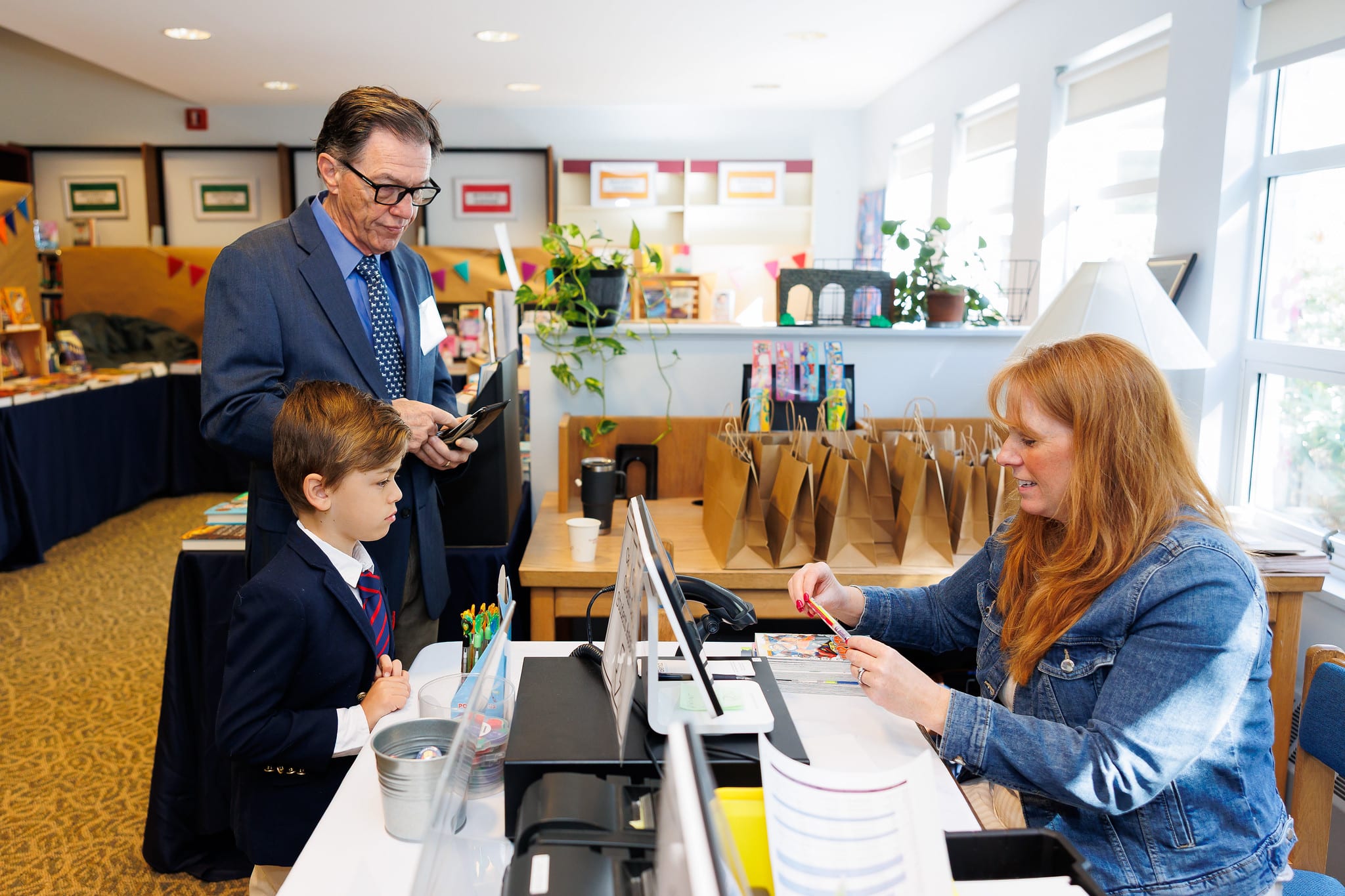
Over the years, that philosophy took shape in large events and small tasks alike — the book fair she loves, the school photo days, the Lower School carnival that grew from a patchwork of separate class parties into something every family could share. Along the way she came to know faculty, fellow parents, and kids well outside her own sons’ circles.
Her own sons grew up inside all of it, too. When they were in Lower School, they’d light up spotting her on campus; by Upper School, the greetings cooled into something closer to a nod. She laughs about it now. But because she was simply always there, her presence never registered as an interruption, it was just part of their Rumsey, the way the dining hall or the carnival was part of their Rumsey.
As she hands off the role, Young hopes the welcome coffee and Parents’ Night Out stick around, because they help families find each other. But she’s also clear-eyed about tradition for its own sake: an event shouldn’t survive just because it always has. Communities change, and their needs change with them. “Sometimes things have a life,” she said, “and then it’s good to rethink that, bring in something else.”
It’s a generous theory of succession: keep what serves people, let go of what doesn’t, and leave room for the next person’s ideas.
Asked what she’ll remember most, Young goes back to the people — the parents and faculty she came to know, the kids she watched grow up around her own. “The beauty in volunteering,” she said, “is how it can benefit everybody.”
A circle doesn’t really have a beginning or an end. It has people willing to keep it moving, to hold a place open for whoever’s next. That is Young’s real legacy: making sure the Rumsey Circle stayed one.