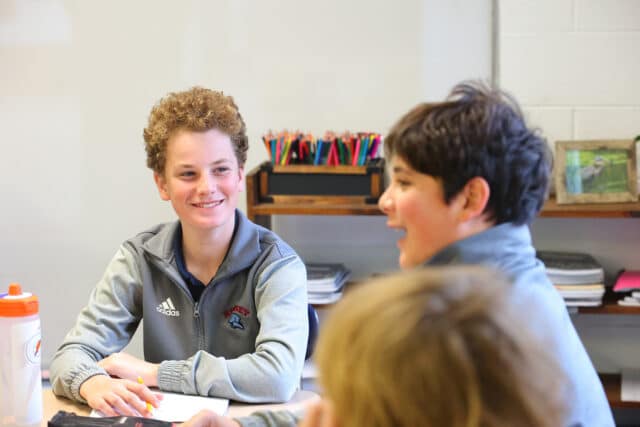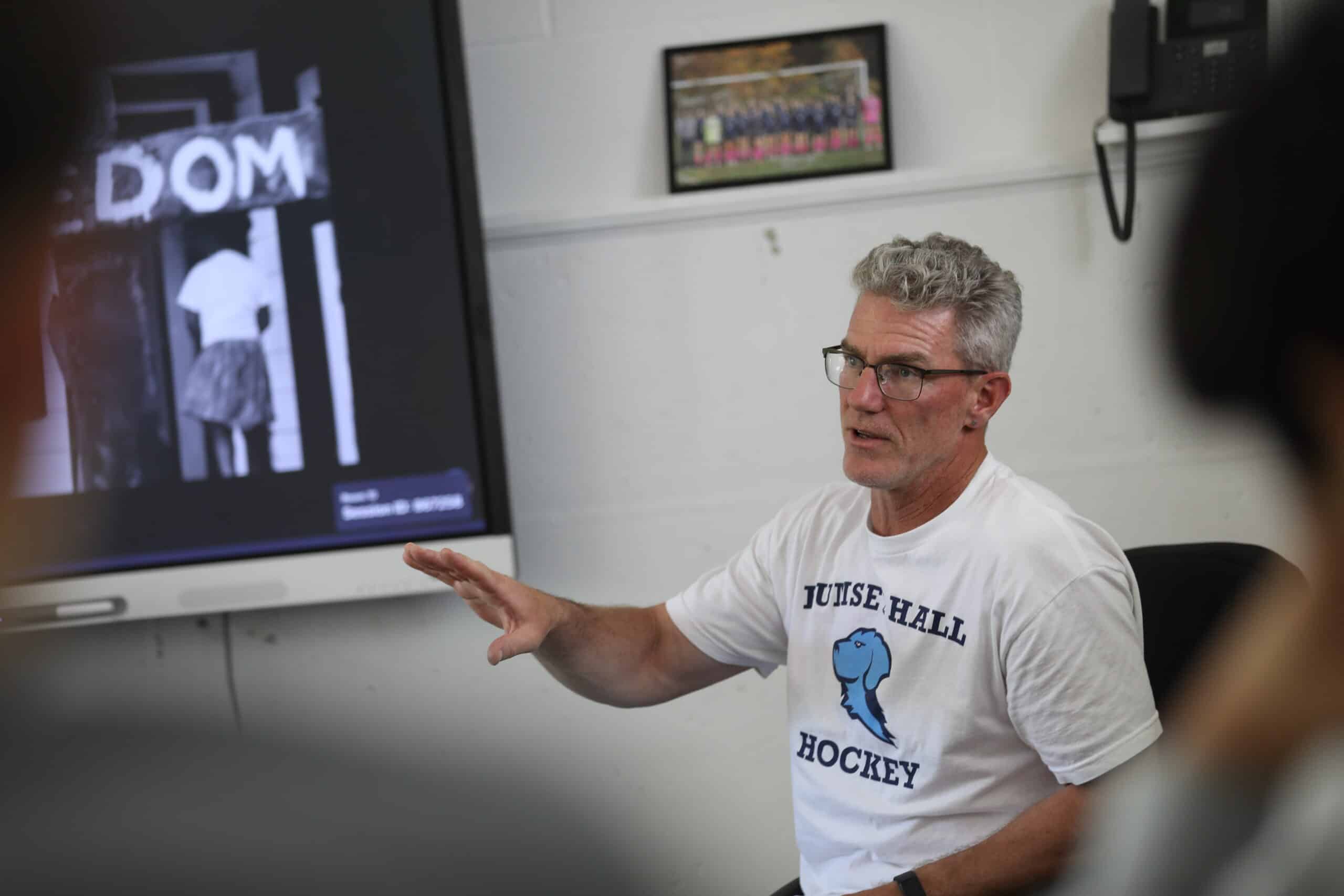
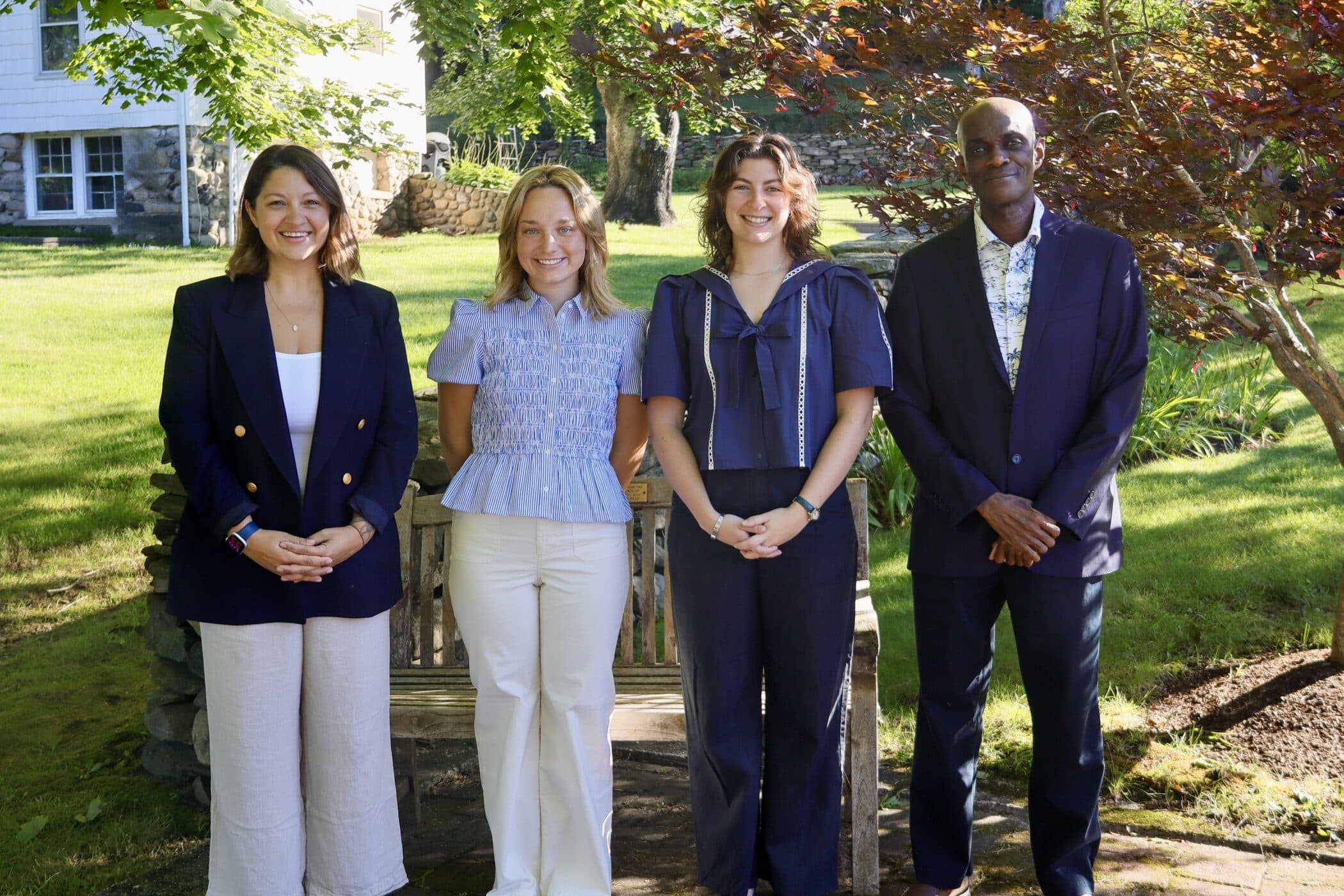

In his 19 years at Rumsey Hall, Sean Kinsella has taught hundreds of students to think critically about history, citizenship, and the world around them. Now in his first year as History Department Chair, he is helping guide the department into a new chapter: one that honors Rumsey’s longstanding commitment to whole-child education while staying responsive to the questions and challenges students face today.
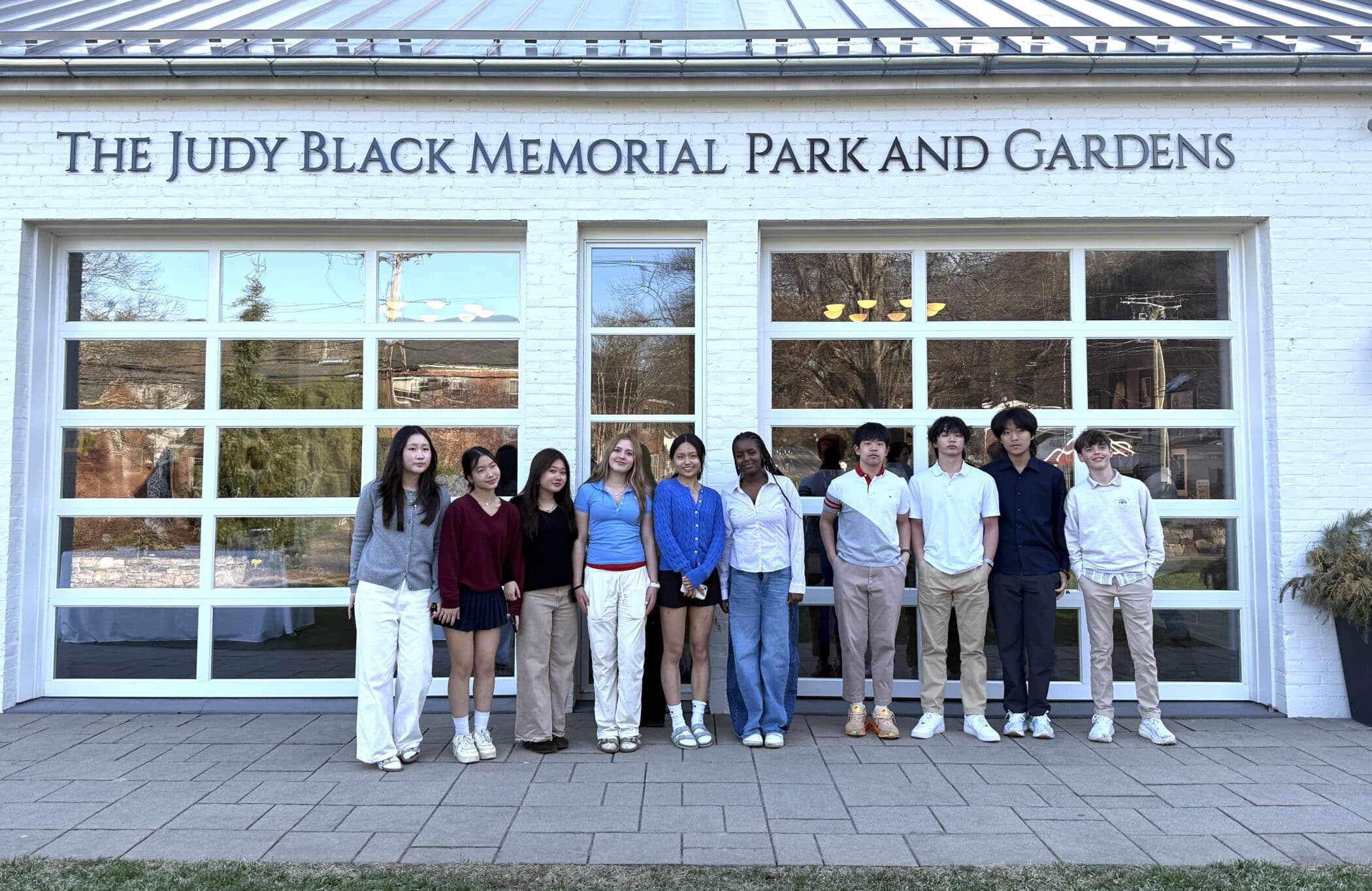
For Mr. Kinsella, history has always been more than dates, documents, and classroom discussion. It is a vehicle for helping students understand systems, examine evidence, ask better questions, and develop empathy. This year, that philosophy has taken shape in several concrete ways: the return of the Washington, D.C. trip, a visit to the Litchfield Judicial District Courthouse in Torrington, and renewed attention to civics, current events, media literacy, and the legal system.
One of his first priorities as department chair was to bring back elements of a civics and current events course that had once been part of the Rumsey experience. The revived version now lives within the Signature Program for ninth graders, giving students a dedicated space to explore government, citizenship, and what civic responsibility actually looks like.
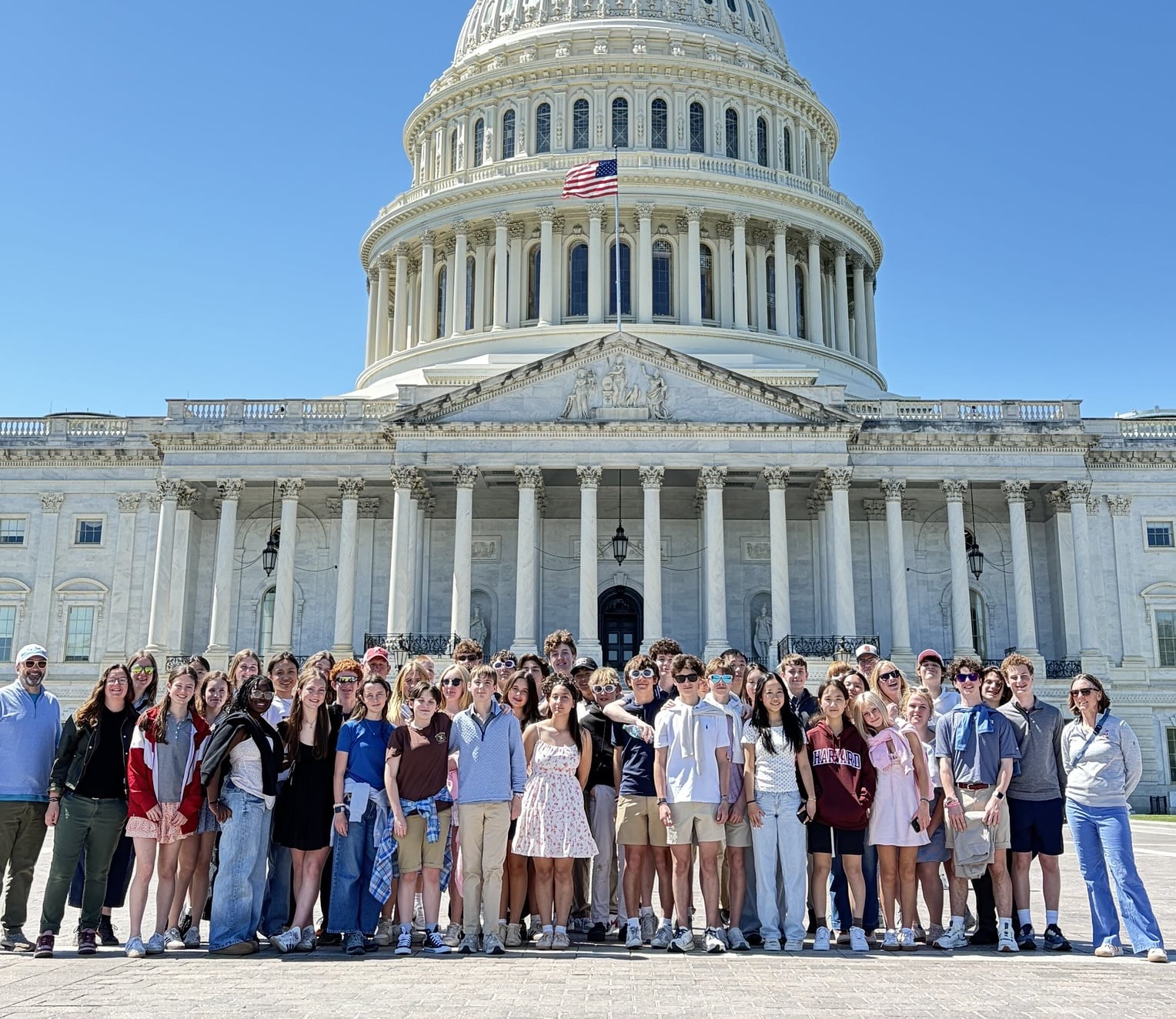
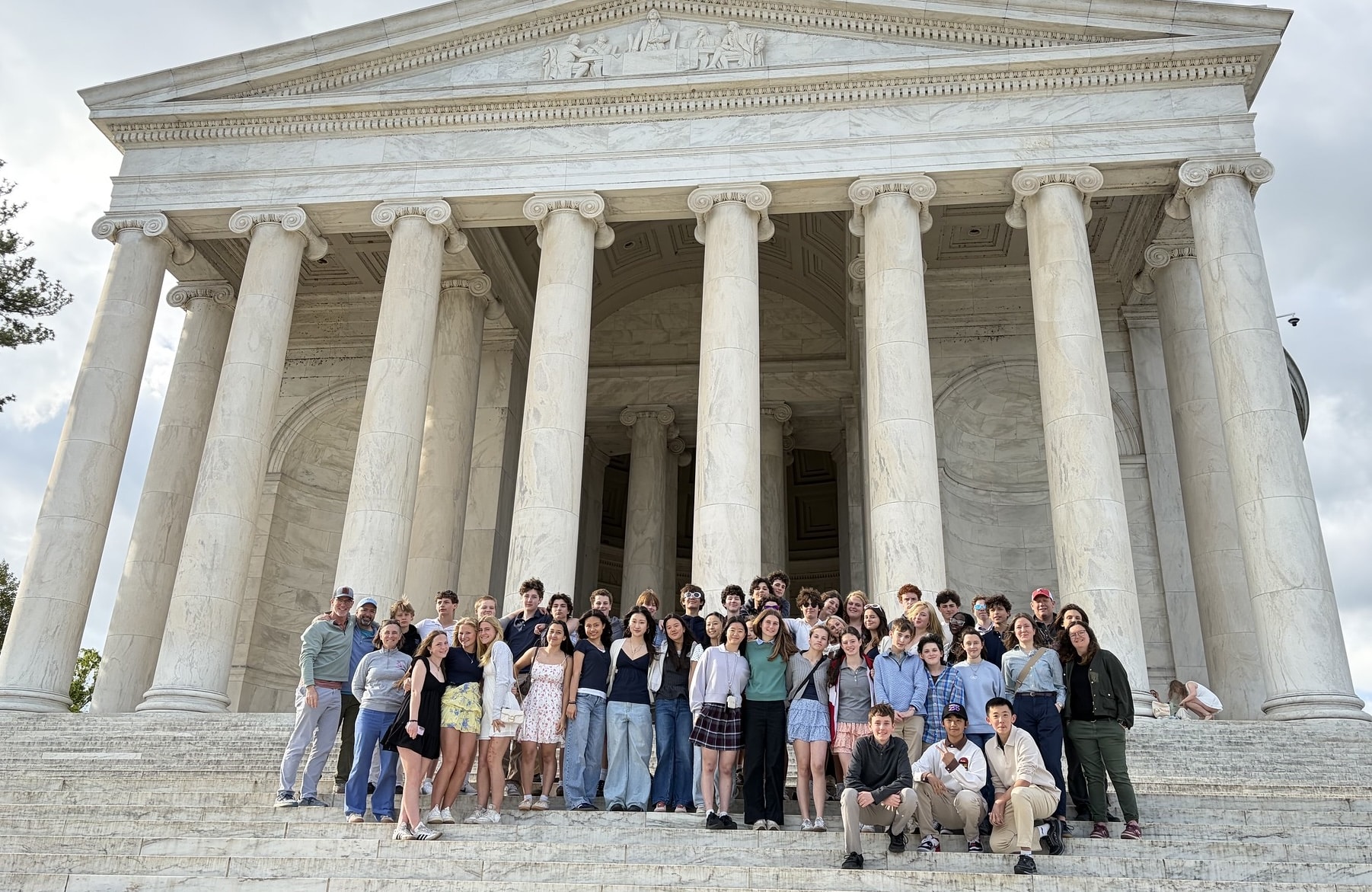
That work also made it possible to bring back the Washington, D.C. trip, a tradition interrupted by COVID. Rather than learning about federal institutions from a distance, students get to see the places, systems, and stories that shape the country firsthand.
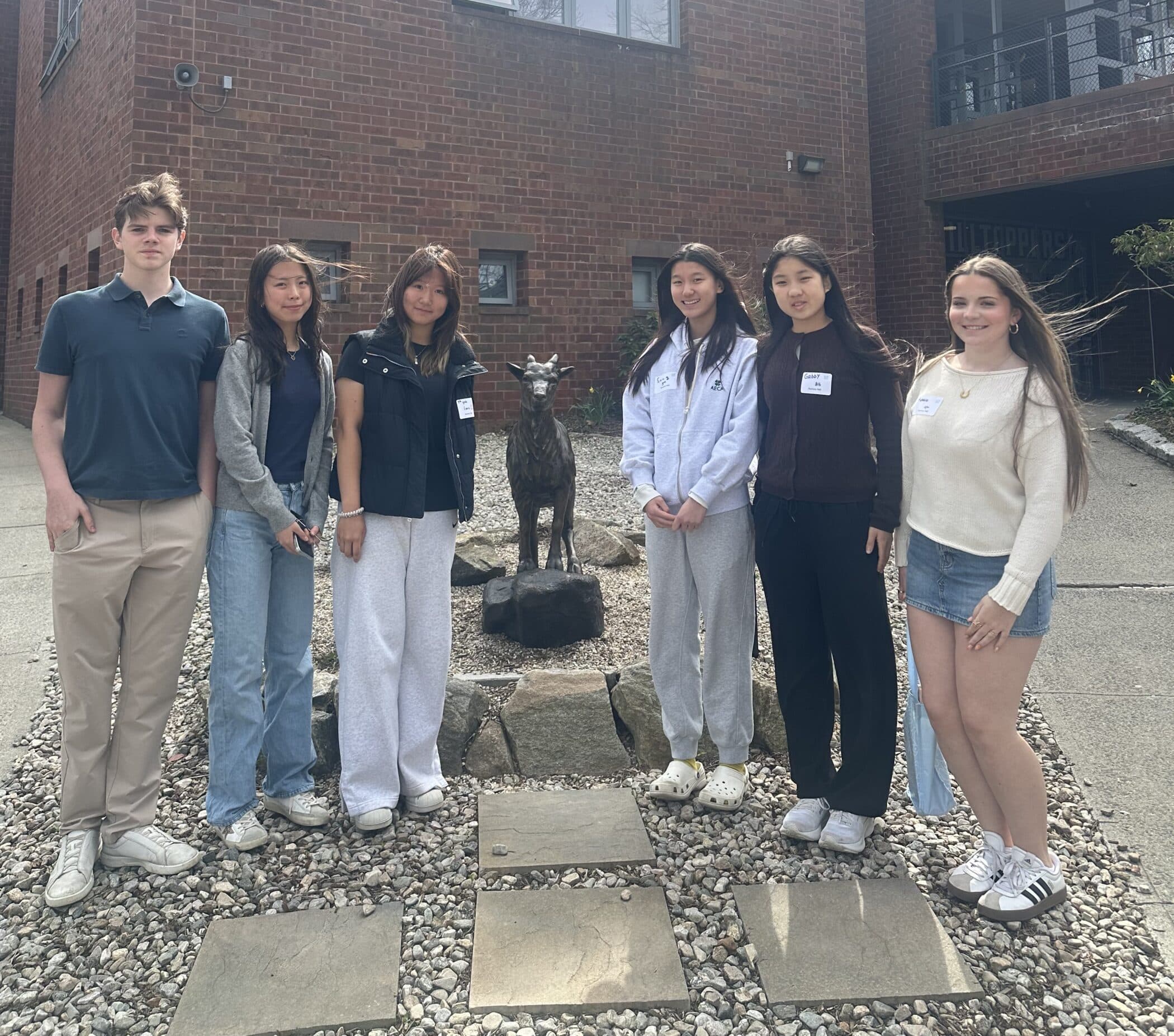
Closer to campus, Mr. Kinsella reintroduced a field trip to the Litchfield Judicial District Courthouse in Torrington, where students observe arraignments and the legal process playing out locally. Before entering the courtroom, they meet with court personnel, hear from a public defender and state prosecutor, and speak with a judge. Then they watch.
The experience, Mr. Kinsella explained, is powerful because it makes abstract lessons real. Students can study due process, prosecution, defense, and the presumption of innocence in class, but the courtroom gives those ideas different weight. They see the human complexity behind the legal system: people facing addiction, abuse, mental illness, difficult family circumstances, and fallout from decisions made in hard moments.
Mr. Kinsella is careful to frame the experience with compassion. Students are reminded that they are not there to judge. They are there to understand. “You will see people who are having the worst day of their life,” he tells them. The trip becomes a lesson in empathy as much as criminal justice.
It also tends to spark real questions. Students often ask how defense attorneys can represent people accused of serious crimes, and those conversations open the door to discussions about constitutional rights, due process, and what fair legal representation actually means. A defense attorney’s job, Mr. Kinsella explains, isn’t to approve of someone’s actions. It’s to make sure every person is guided through the system fairly.
Looking ahead, the History Department is preparing to introduce an honors-level history course next year, the first of its kind in Rumsey’s program. Peter Green will develop and teach it, building on the existing curriculum with greater depth, more primary source work, and more intensive reading and writing. Mr. Kinsella is enthusiastic: Mr. Green is an outstanding educator, and the course will be a real challenge for students who are ready for it.
Mr. Kinsella is also thinking carefully about what history education needs to do right now. The humanities feel essential, maybe more than ever, in a world shaped by AI, social media, and rapid technological change. Students are growing up with access to new ways of finding information and forming opinions, which makes media literacy increasingly important. In the classroom, that means helping students examine sources, compare perspectives, consider editorial choices, and ask what a story might be leaving out. It also means being honest about tools like AI: they’re only as useful as the knowledge behind the questions. The more students understand a subject, the better equipped they are to use AI critically, to ask sharper questions, push past simple summaries, and recognize when a response needs more scrutiny.
Even as the world changes, Mr. Kinsella believes Rumsey’s core has stayed constant: a commitment to knowing students well and creating the conditions for many different kinds of learners to thrive. That’s personal for him, too. He raised his three children on campus and has spent nearly two decades woven into the life of the School. Coaching, residential life, and everyday moments with students matter just as much to him as what happens in the classroom.
There’s not a day that goes by that I’m not grateful.” – Mr. Kinsella
History, for Mr. Kinsella, isn’t something students just study; it’s a discipline that asks them to become more observant, more skeptical, and more humane. Whether they’re working through a primary source, walking the halls of government in Washington, or watching the justice system unfold in a Torrington courtroom, the goal is the same: to look longer, think harder, and see the people inside the systems that shape our world.